How do I measure the values of my pool correctly?
Swimming in healthy pool water is what everyone wants!
You achieve healthy pool water by measuring frequently and adjusting where necessary. We have created a simple step-by-step plan for you so that you can always have perfect pool water. These 4 steps must be followed in this order.
There are various water testers on the market to measure your water quality. It is important that you never measure in the sun.
- AquaCheck strip: compare values using a colour chart – simple and inexpensive!

What to do with which values?
1. Chlorine stabiliser should be as low as possible when working with chlorine tablets or chlorine powders. When using automation based on salt or on chlorine, you need a chlorine stabiliser level of 20.
- Less than 50: Reuse the existing pool water and possibly switch to non-stabilised chlorine granules to stop this from rising any further.
- More than 300: Empty and clean your pool with Descaler and fill it again with fresh tap water. Add the necessary dose of anti-limescale Add. (To be calculated based on the volume of the pool)
2. Alkalinity value should have a minimum of 80. Fresh tap water is +180 and rainwater is 0.
Add AlcaPlus Add at values below 80. Set the six-way valve to circulate and switch off the automation if necessary. Use 180 g/10 m³ to raise the alkalinity value by 10. Add product every 3 to 4 hours until you reach a value of 100 to 120. Then test your pH values. If it is still too low, bring it up to 7.2 with pH-plus.
3. Acidity (pH value) is one of the most important factors for healthy pool water. The ideal value is 7.2 (a wider margin is 7.0 to 7.6). Measure the acidity in the morning. Then the sun has no influence on the water.
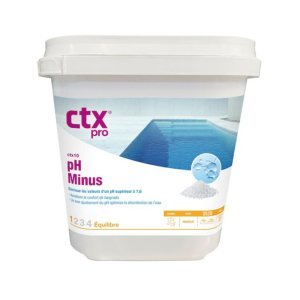
- Lower pH if the pH value is too high: dosage: 150 g/10 m³ to lower by 0.2 with pH-min
- Raise pH if the pH value is too low: dosage: 150 g/10 m³ to raise by 0.2 with pH-plus
If all values (pH, alkalinity and stabiliser) are in order, and if the water temperature is above 10°C, only then may you add chlorine.
4. Chlorine level is an indicator of whether disinfection is present in the pool or not. Only once the acidity (pH) is at the right level can you adjust the chlorine level. Chlorine sterilises the water and kills micro-organisms, such as algae and bacteria. The ideal value is between 1 and 3 ppm.
Bring the chlorine level up to standard with a chlorine shock (dosage 100 g/10 m³). Dissolve the quantity of chlorine granules/powder and pour the mixture into the skimmer with the six-way valve set to circulate.
The chlorine level is maintained with chlorine tablets (1 per 30 m³). Place the tablets in the skimmer basket or in a floating chlorine dispenser. For regular maintenance, you may add 50 g/10 m³ Add chlorine powder. Adjust according to your measurement.
With these 4 steps, it is therefore possible to keep your water quality well under control. If you have any problems, you can always contact us via chat!
Enjoy your healthy pool water!