


Summer maintenance for your pool: Tips and tricks for crystal-clear water
This advice is part of the ‘All about saltwater pools: Your complete guide’ series.
Summer has finally arrived. Temperatures are rising, the barbecue is on and the pool becomes the most popular spot in the garden. Whether it's a refreshing dip in the morning or children playing in the afternoon: your pool is working overtime.
But it's precisely during this period, when you want to enjoy your pool the most, that the danger of problems lurks. Heat, bright sunlight and intensive use form a golden combination for bacterial growth and algae. Before you know it, your crystal-clear blue paradise turns into a cloudy, green soup.
Fortunately, this doesn't have to happen. With the right routine and a bit of attention, you can effortlessly maintain water quality. In this blog post, we share an extensive guide for summer pool maintenance. We give you a handy checklist, tell you how to deal with sunscreen in the water and how to prevent that dreaded green build-up.
Why is summer so hard on your pool?
Before we look at the solutions, it's good to understand exactly what happens to your pool water in summer. There are three important factors that disrupt the balance:
- High temperatures: Bacteria and algae love warm water. The warmer the water, the faster they multiply. In addition, chlorine evaporates faster at high temperatures, reducing your disinfection.
- UV radiation: Sunlight breaks down chlorine. On a cloudless summer day, the sun can 'eat up' up to 90% of the free chlorine in your pool within a few hours if you don't use a stabiliser.
- Pollution: More swimmers means more dirt. Think of skin flakes, hair, sweat, but especially: residues of sunscreen and cosmetics. This organic dirt is food for bacteria and makes the water cloudy.
To tackle these challenges, you need to step up your maintenance routine during the summer months.
The Golden Rule: Adjusting filter times
Many pool problems in summer arise simply from too little circulation. Stagnant water is the enemy. Your filter system needs to work much harder in summer than in spring or autumn.
A handy rule of thumb for pump duration is: The temperature of the water divided by two.
Is your pool water 28 degrees? Then the pump should run at least 14 hours per day. During a heatwave, when the water approaches 30 degrees, it's often wise to let the pump run continuously (24 hours) or at least 18 hours. In any case, make sure the pump is on during the day, when the sun is shining and people are swimming. That's when the need for filtration and mixing of chemicals is greatest.
Your checklist for summer pool maintenance
Structure is the key to success. By scheduling fixed moments, you avoid falling behind.
Daily tasks (5 minutes)
- Check the water level: Due to evaporation and splashing children, the water level drops quickly. Make sure the level is halfway up the skimmer opening. A water level that's too low can cause the pump to suck in air and run dry.
- Emptying skimmer baskets: In summer, pollen, insects and leaves often blow into the pool. Empty the baskets in the skimmer so that the water flow remains optimal.
- Skimming the surface: Use a scoop net to remove floating debris before it sinks to the bottom.
- Visual check: Does the water look clear? Is there no early green build-up on the walls?
Weekly tasks (30 minutes)
- Vacuuming the bottom: Even with good filtration, sand and fine dirt sink to the bottom. Use a pool vacuum or – even easier – set your pool robot to work.
- Measuring water values: This is crucial. Measure the pH value and chlorine level at least twice a week. In extremely hot weather (above 28 degrees), it's best to measure every other day.
- Cleaning the edge: A greasy line often forms on the waterline due to sunscreen and pollen. Scrub this away with a special edge cleaner and a soft sponge to prevent it from burning into the liner.
- Backwashing the filter (Backwash): All the dirt causes your sand filter to become saturated and the pressure to rise. Backwash the filter for 2 to 3 minutes weekly to discharge the dirt to the drain. Don't forget to rinse afterwards (Rinse).
Water balance: Measuring is knowing
In summer, your water values fluctuate more quickly. Here's what you need to watch out for:
1. The pH value (Acidity)
The ideal pH value lies between 7.2 and 7.6.
- Is the pH too high (> 7.6)? Then your chlorine barely works anymore and you get limescale build-up.
- Is the pH too low (< 7.0)? Then the water is corrosive to your equipment and you may experience irritated eyes.
In summer, the pH often tends to rise (due to chlorine consumption and splashing, among other things). Correct this in time with pH-minus granules or liquid.
2. The Chlorine level (Disinfection)
The ideal value for free chlorine in summer lies between 2 and 3 ppm (mg/l). In colder periods, 1 ppm is often enough, but in summer you really need that extra buffer. Is the value dropping too far? Then add chlorine tablets or granules immediately.
Tip: Preferably add chemicals in the evening after swimming. This way they can work all night without being broken down immediately by the sun.
Dealing with intensive use and sunscreen
A full pool is enjoyable, but all those swimmers bring contamination with them. Sunscreen is one of the biggest culprits. It forms an oily film on the water, clogs the pores of your filter cartridge or sand bed, and breaks down chlorine extremely quickly.
How do you limit the damage?
- The shower rule: It's the simplest, yet most effective tip. Have everyone shower before swimming. Even a quick rinse removes most sweat, cosmetics and excess sunscreen. A solar garden shower is ideal for this.
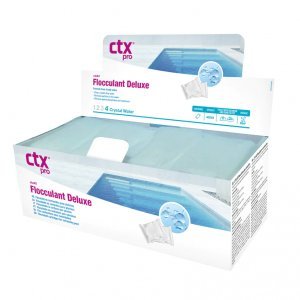
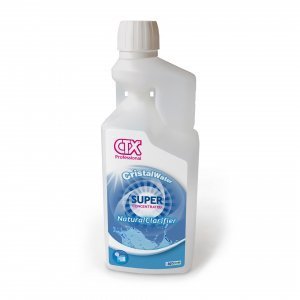
- Use flocculant: Sunscreen particles are often so small that they slip through the filter. Flocculants ensure that these small dirt particles 'clump' together in the water. Because the particles are then thicker, the pool's filter can filter them out of the water this way. Use a flocculant tablet in the skimmer or liquid flocculant weekly for clear water.
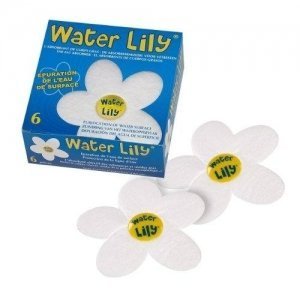
- Anti-grease products: There are special “absorbers” available (often in the shape of a small sponge or flower) that you place in the skimmer. These absorb fats and oils from the water surface.

The battle against algae: Prevention is better than cure
Warm weather and thunderstorms are the perfect ingredients for algae growth. Algae are microscopically small plants that turn your water green and make the walls slippery.
Once your water has turned green, it takes a lot of time and chemicals to get it clear again. So prevention is key.
- Keep chlorine at the right level: As long as there's enough free chlorine in the water, algae don't stand a chance. Make sure you never reach 0.
- Anti-algae: Use an anti-algae product as a preventative measure. This doesn't kill algae directly (that's what chlorine does), but it does slow down growth and reproduction. Add a dash weekly according to the packaging.
- Scrubbing: Algae like to attach themselves to dead corners, steps and edges. Brush the walls and bottom regularly to prevent algae from taking hold.
- Be careful after a thunderstorm: Thunderstorms change the electrical charge in the air and bring nitrogen in the rain, which acts as a fertiliser for algae. Measure and correct your chlorine value immediately after a heavy thunderstorm. A small chlorine shock is often needed.


What to do if you go on holiday?
It's the irony of pool ownership: in summer you often go on holiday yourself too. How do you make sure you don't come home to a green swamp?
- Ask the neighbours: The best option is if someone keeps an eye on the pool. Ask your neighbours to empty the baskets once a week and check that the pump is still running.
- Cover the pool: Use your summer cover or bubble cover. This prevents evaporation and keeps dirt and sunlight out of the water. Less sunlight means less algae growth.
- Lower the pH: Bring the pH value down to 7.0 or 7.2 before you leave.
- Give a chlorine shock: Add extra chlorine just before departure.
- Use slow-dissolving tablets: Fill a chlorine floater with sufficient tablets (for example 200-gram tablets) and set the opening to the minimum setting. This way, a small amount of chlorine is released for weeks.
- Timer: Make sure the pump keeps running for sufficient hours daily via a timer. Do not switch off the pump during your holiday!
Conclusion
Summer pool maintenance requires regularity, but it doesn't have to be a full-time job. By working preventively and building in fixed check moments, you stay ahead of problems. A clean pool starts with good circulation, correct water values and swimmer hygiene.
Do you notice that the water becomes dull despite your efforts? Don't wait, but take action immediately. An extra backwash, a chlorine shock or a flocculant tablet often works wonders. Enjoy the summer and your refreshing swim


