






Description
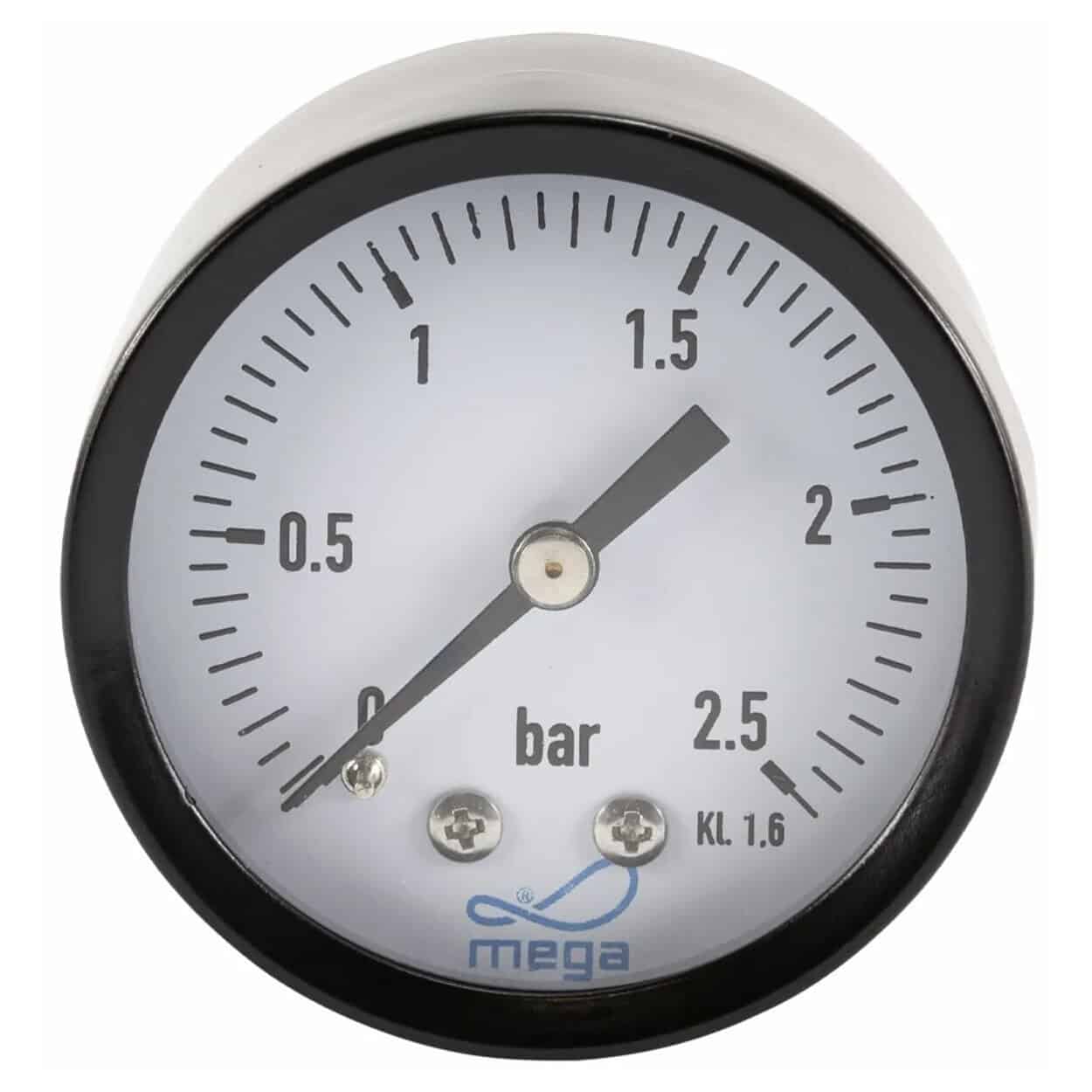
Pressure gauge sand filter pressure meter 0 – 2.5 bar (1/8″) (rear connection)
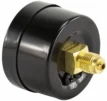
The pressure gauge is a small but essential part of your sand filter system. This pressure gauge continuously indicates the condition of your pump and filter medium, so that you can see at a glance whether your system is functioning properly. With a measuring range of 0 to 2.5 bar, a sturdy metal casing and a brass 1/8″-rear connection, this pressure gauge is the ideal replacement gauge for smaller sand filters that operate at low pressure and require a compact thread with rear connection.
Why is a pressure gauge important?
The filter pressure tells you more than you might think. If the pressure is too high, it may be time to backwash or there could be a blockage in the pipe. If the pressure is too low, there is insufficient flow and your pump may not be running at full capacity, or there is air in the system. By regularly monitoring the pressure, you prevent water quality problems and unnecessary strain on your filter pump.
Accurate reading at low pressure
A pressure gauge with a lower measuring range is more accurate within the range in which your filter usually operates. Many smaller sand filter sets operate at a working pressure of 0.5 to 1.5 bar — on a 0–2.5 bar dial you can read these values much more precisely than on a gauge that goes up to 4 or even 6 bar. Always check the range of your current pressure gauge before purchasing, so you order the correct replacement.
Rear connection: note the difference
This pressure gauge has a rear connection, which means that the thread is located at the back of the gauge (in line with the dial). This is in contrast to a bottom connection, where the thread is positioned perpendicular below the gauge. Always check before purchasing which type of connection your current pressure gauge has, so that the new gauge fits correctly into your filter housing.
When should you replace the pressure gauge?
A pressure gauge can fail over time due to limescale, moisture or mechanical wear. You can recognise a faulty pressure gauge by the following symptoms:
- The needle gets stuck — the pressure gauge remains at a certain value (bar), even when the pump is switched off.
- The needle does not respond — the pressure gauge does not rise despite the pump running properly and there being sufficient flow.
- Visible damage — the glass is cracked, the dial is fogged up or the housing shows signs of rust.
In all these cases, we recommend replacing the pressure gauge. Always compare your old pressure gauge with the specifications before purchasing, in particular the measuring range (0–2.5 bar), the connection size (1/8″) and the type of connection (rear).
Specifications
- Housing material: metal
- Connection material: brass
- Measuring range: 0 – 2.5 bar
- Connection type: rear connection
- Thread: 1/8″ (0.9 cm)


